Key takeaways
- A frozen pipe is not always a burst pipe. The freeze itself can stop flow for hours before a split appears.
- If you suspect a freeze, shut off the water supply before thawing. A split line releases water the moment ice turns back to liquid.
- Never thaw a pipe with an open flame, a kerosene heater or a high-output space heater. Warm air, towels and a hair dryer moved slowly are safer.
- Vermont's highest-risk runs are exterior walls, unheated crawlspaces, garages, attics and camp plumbing left at low heat.
- A burst pipe is a water damage emergency. Call (888) 912-0836 as soon as the supply is off.
Every winter, Vermont homeowners hear the same sequence: a tap that slows to a trickle, a knock inside the wall, then water where water should never be. A frozen pipe can be a minor inconvenience or the start of a whole-house drying project, and the difference is usually how quickly the freeze is recognized and how safely it is thawed.
This guide explains why Vermont plumbing freezes, what the warning signs look like, how to thaw a line without making the damage worse, and what to do when a pipe has already split. It is written for the cold-climate houses that make up most of the state: older farmhouses with exterior-wall plumbing, camps closed for the season, capes with unheated crawlspaces, and remodels where a supply line was run through an attic or garage.
Why Vermont pipes freeze so easily
Water expands when it freezes, and the ice that forms inside a closed pipe has nowhere to go. The pressure builds between the ice and a closed valve or faucet, and a split can open even when the pipe itself is not completely frozen. A short, sharp cold snap is often enough. Wind matters too: an exterior wall that stays at 25°F on a calm day can drop well below freezing when the wind pulls heat out of the siding.
The usual vulnerable runs are predictable. Hose bibs and outdoor spigots freeze first. Supply lines tucked against an exterior wall behind a kitchen cabinet freeze next, especially when the cabinet door stays closed and the room is cool. Pipes in unheated basements, crawlspaces, garages and attics are exposed to outside temperatures for hours. So are lines in camp kitchens, shower houses and laundry rooms that are drained only at the end of the season, not before a November cold snap.
Older Vermont homes add another layer. Galvanized steel rusts from the inside and narrows the flow. Copper thins at soldered joints. Early plastic fittings become brittle. A pipe that survived twenty winters can fail in a colder-than-usual week because the margin was already gone. The risk follows the housing stock, from older rentals in Burlington and Winooski to farmhouses around St. Albans.
Frozen pipe warning signs
A frozen pipe is not always obvious. Use this checklist when the temperature has stayed below freezing and something feels off:
Most common clue: one fixture has weak or no water while other taps in the house still run normally. That points to a blocked branch line, not a whole-house supply failure.
| Warning sign | What it usually means |
|---|---|
| No water at one tap, or a thin trickle | Ice is blocking a branch line or fixture supply. |
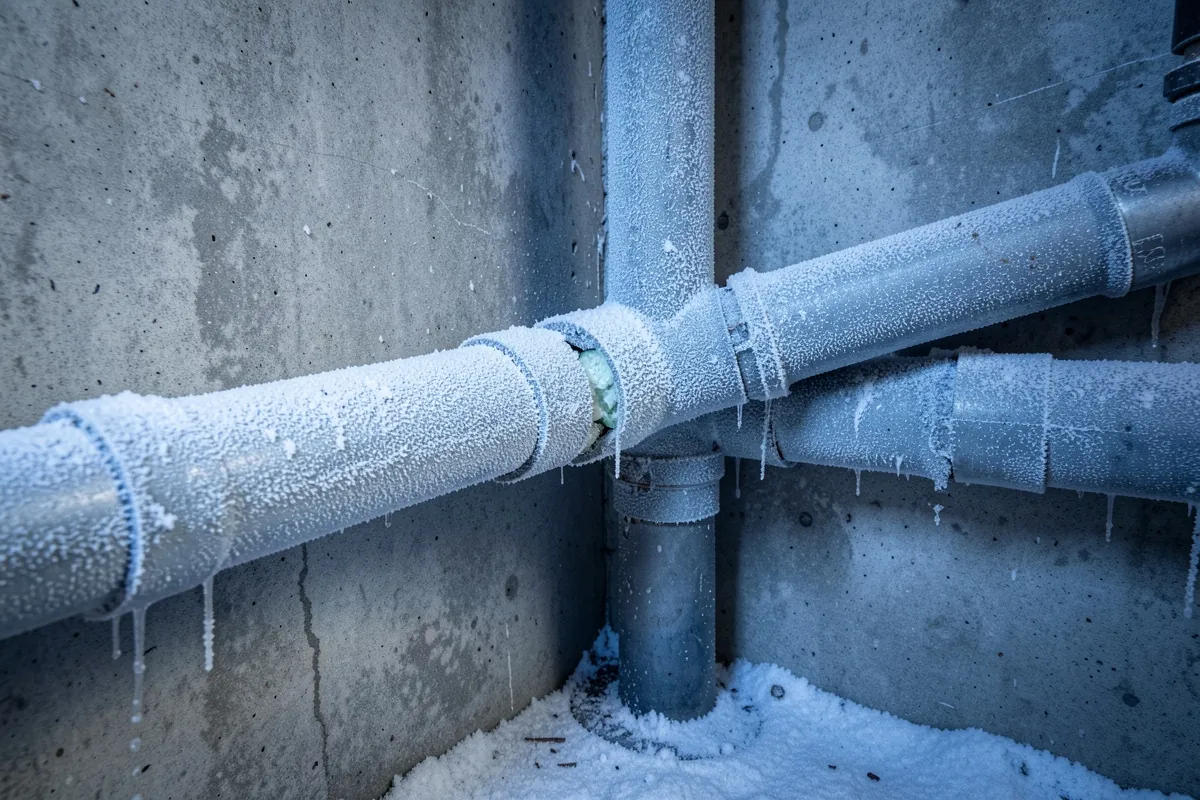
| Frost on a visible pipe | The pipe is at or below freezing; act before it splits. |
| Bulging or discolored pipe | Ice has expanded and the pipe may already be damaged. |
| Hissing, dripping or running water with fixtures off | A split has opened and water is escaping. |
| Damp patch, bubbling paint or soft drywall | Water is traveling inside a wall or ceiling cavity. |
| Musty odor in a closet or basement | A slow leak may have been running for days or weeks. |
| Water meter moving with no fixtures on | Water is escaping somewhere in the system. |
What to do first if a pipe is frozen
Before you warm anything, find the shutoff. If the pipe has already split, thawing releases the water behind the ice. Shut off the main valve if you can reach it safely, then open the lowest faucet in the house to give melting water a place to go. If the main valve is stuck, call for help before you start thawing.
Next, identify the frozen section. Feel along the pipe for the coldest point, or look for frost. Start thawing at the faucet end and work back toward the supply. That direction lets melting water escape through the open tap instead of building pressure against a closed valve.
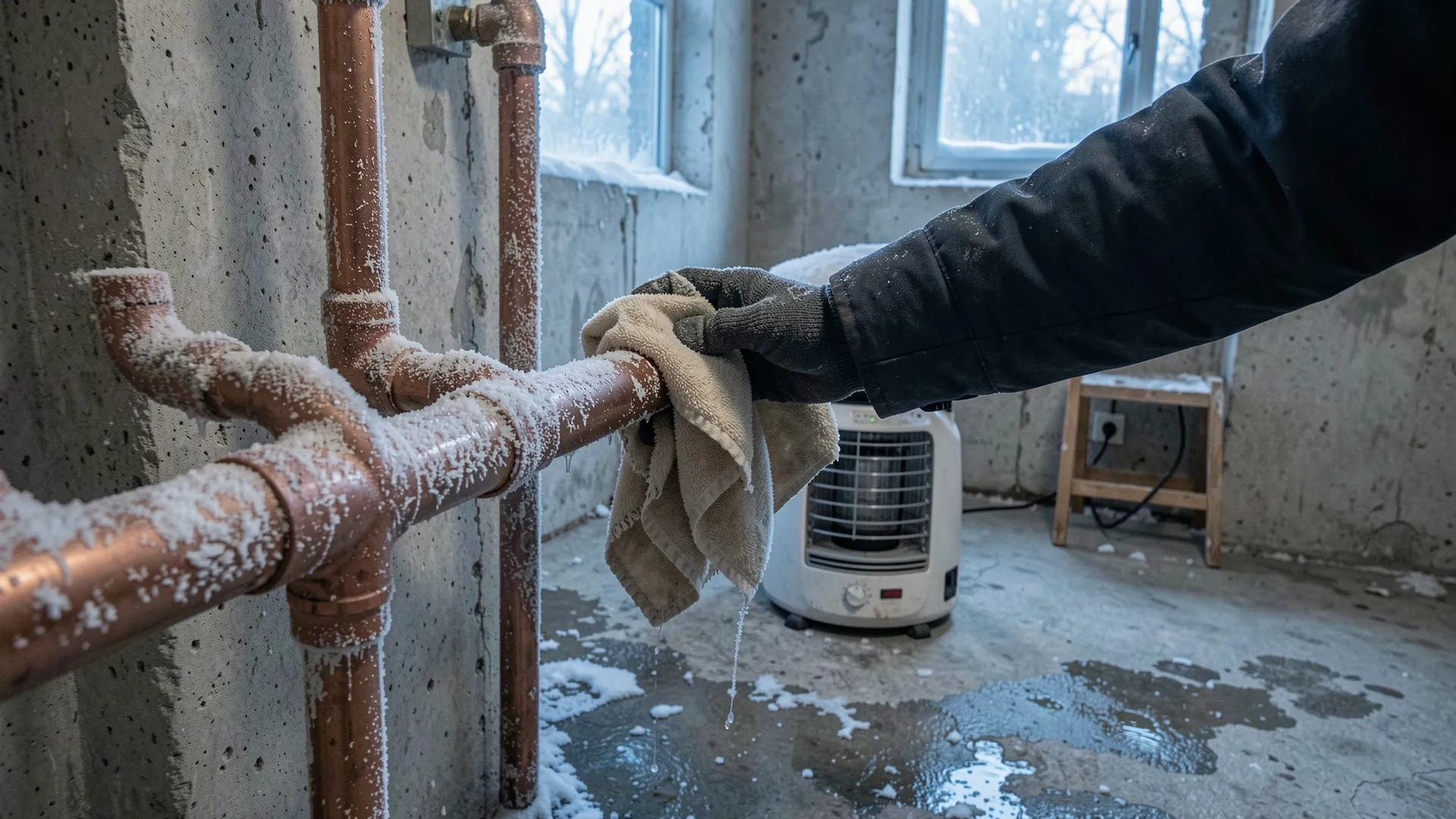
Use gentle heat. A hair dryer on a low or medium setting, a heat lamp kept at a safe distance, or towels soaked in warm water wrapped around the pipe all work. A portable space heater can help warm the room, but keep it away from water and never leave it unattended. Heat tape rated for plumbing is useful if the pipe is accessible and the installation is done correctly.
Never use an open flame, a blowtorch, a kerosene heater or a charcoal grill. Beyond the fire risk, concentrated heat can crack copper, melt plastic and ignite insulation inside the wall. Never pour boiling water directly onto a frozen pipe or into a fixture. And never leave a running faucet unattended while you wait for a freeze to clear, because a split can release water as soon as the ice moves.
Water running where it should not?
Stop the supply if it is safe, then call for a local crew. We can help you decide whether to thaw or wait.
Call (888) 912-0836When a frozen pipe becomes a burst pipe
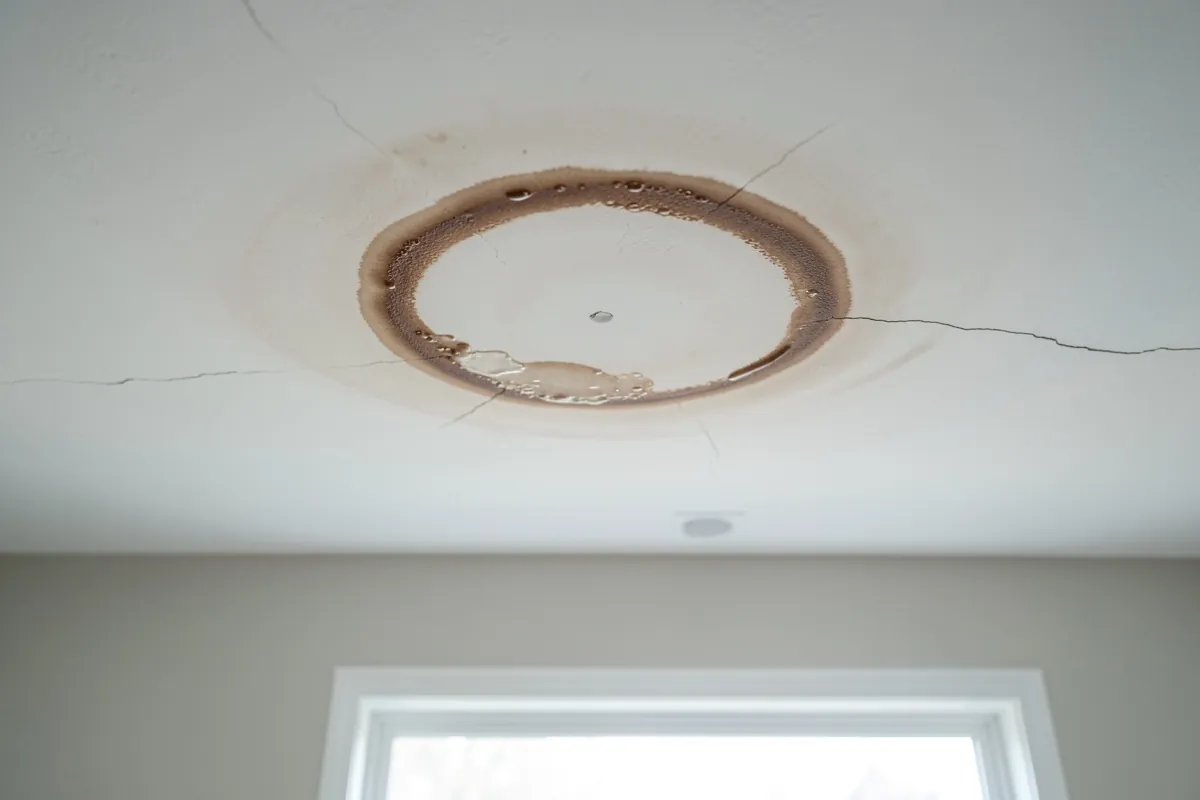
A split pipe can release water inside a wall, under a floor or above a ceiling. The first visible sign may be a stain on the ceiling below, a soft baseboard, a lifted vinyl floor or a damp carpet edge far from the actual break. By then, water has often been traveling along framing for hours.
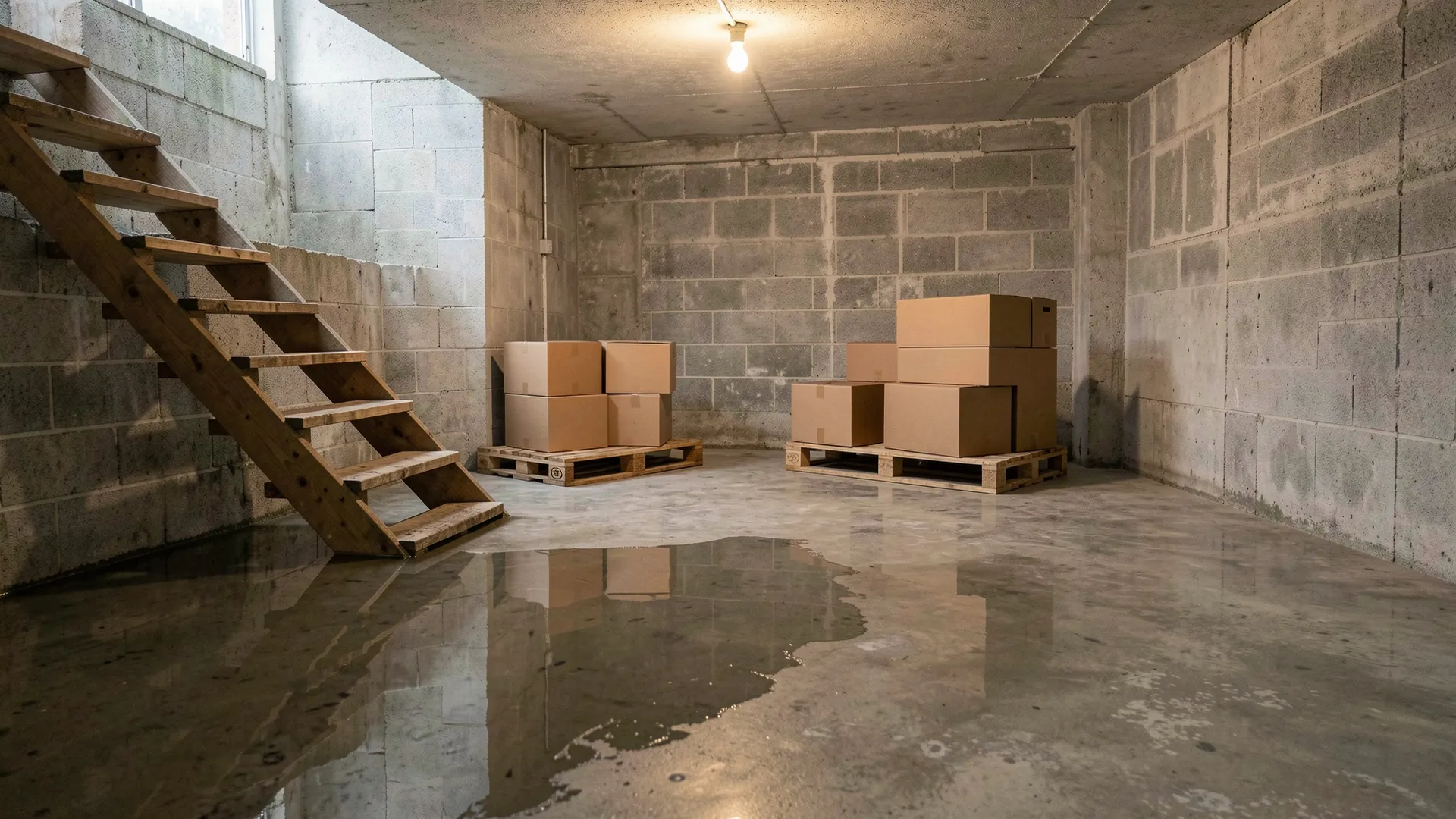
If you see active water, shut off the main supply immediately if you can do it safely. Cut power to wet rooms from a dry breaker panel. Do not touch outlets, switches or appliances standing in water. Move furniture and valuables away from the wet area, and photograph the source and the water line before cleanup begins.
Then call a restoration crew. The work is not only extracting the visible water. Technicians use moisture meters and thermal imaging to find water inside wall cavities, subfloors and insulation. They dry the structure in stages and record readings so you know when the assembly is actually dry. That record matters for your insurance claim and for preventing mold weeks later.
For a burst pipe, the relevant service is frozen and burst pipe water damage. If water has already spread across floors or into a finished basement, start with emergency water extraction, then move to full restoration once the bulk water is out.
How to prevent the next freeze
Prevention is mostly about keeping warm air where the plumbing is and keeping cold air out. Before the first deep freeze, walk the house with a flashlight and check every place a pipe runs near an exterior surface.
- Insulate vulnerable runs. Foam sleeves help, but insulation only slows heat loss. It does not replace a warm room.
- Seal air leaks. Look for gaps around pipes where they pass through rim joists, sill plates and exterior walls. Cold air entering through a small gap can freeze a line that otherwise stays warm.
- Open cabinet doors. On exterior walls, leaving cabinet doors open lets room air reach the plumbing, especially during a cold snap.
- Keep the thermostat steady. Do not switch the heat off overnight or while you are away. A lower but steady setting is safer than a cold house followed by a rapid warm-up.
- Disconnect hoses and drain spigots. A hose left connected traps water in the faucet and can split the fixture from the inside.
- Shut down camps properly. Drain the water heater, supply lines and traps, or keep the heat at a safe minimum and have someone check the property.
- Know the main shutoff. Every adult in the house should know where it is and how to turn it. Test it before winter, not during a leak.
If you leave Vermont for an extended period, do not simply turn the heat down and hope. Either maintain a safe minimum temperature and arrange a check-in, or winterize the plumbing completely. A vacant house with a failed furnace can freeze solid within a day of a hard cold snap. For the roof-side risks that arrive with the same weather, read our guide to ice dams and ceiling leaks.
What about wells, camps and seasonal plumbing?
Vermont has a lot of well systems, camps and seasonal buildings. Well lines run underground, but the pitless adapter, pressure tank and interior piping can still freeze. A camp that is closed for the season should have its water system drained, the water heater emptied and antifreeze added to traps that cannot be fully drained. If the camp stays open through winter, keep the heat on and ask a neighbor to check after storms.
Outdoor spigots deserve special attention. A frost-free hydrant can still split if a hose is left attached or if the installation drains toward the house instead of away from it. Disconnect hoses, shut off the interior valve if one is installed, and open the outdoor faucet to let residual water drain.
Frozen pipe FAQs
At what temperature do pipes freeze?
Most unprotected supply lines begin to freeze when the temperature stays around 20°F or below for several hours. Exterior walls, crawlspaces, garages and attics cool faster than the rest of the house, so those runs fail first even when the thermostat reads a comfortable temperature indoors.
Should I leave a faucet dripping during a cold snap?
A slow drip can relieve pressure and reduce the chance of a split in a vulnerable line, but it is not a substitute for heat, insulation and air sealing. If you use the drip method, choose the faucet farthest from the supply entry and keep cabinet doors open on exterior walls.
How long does it take to thaw a frozen pipe?
It depends on the pipe size, the length of the frozen section and how much access you have. A short fixture line may clear in 20 to 30 minutes with a hair dryer. A long run inside a wall can take hours. If water does not begin flowing after a reasonable effort, stop and call a professional rather than escalating the heat.
Can a frozen pipe burst even if no water is coming out?
Yes. The ice can block the flow while pressure builds between the ice and a closed valve. The split may not leak until the ice begins to melt. That is why shutting off the supply before thawing is so important.
Does homeowners insurance cover a burst pipe?
Many policies cover sudden and accidental water damage from a burst supply line, but coverage depends on the policy language, the cause and how the loss was documented. Keep photos, receipts and a record of when the damage was discovered. Our insurance guide explains the common exclusions.
The bottom line
Frozen pipes are a winter reality in Vermont, but a burst pipe does not have to become a full rebuild. Know where your main shutoff is, watch the vulnerable runs, thaw gently and shut the water off before you warm a line. If water is already moving inside a wall, call (888) 912-0836 and start documenting. The first hour makes a difference.

Vermont Restoration Pros
A Vermont-focused dispatch line for water damage, extraction, drying, mold and sewage cleanup. Open 24 hours a day, every day.
How the dispatch line works ›